A Better World
I took my kids to the National WWII Museum in New Orleans to help them understand the most consequential war in history. I didn't expect to spend the day fighting off grief.
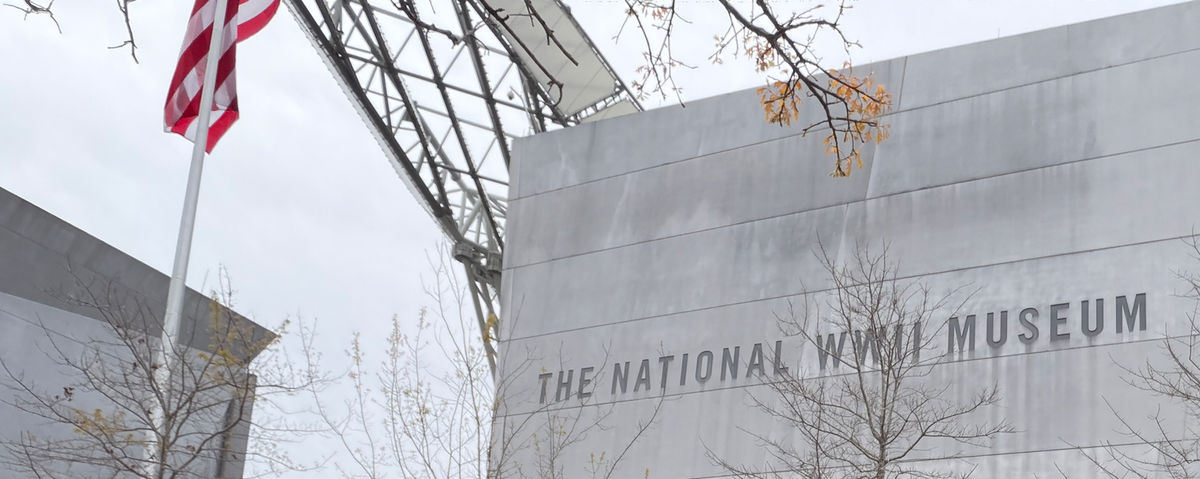
I've spent the better part of a year writing about what's happening to this country. I thought that meant I'd processed it — named it, framed it, understood the shape of it. Then I took my kids to the National WWII Museum in New Orleans, and I spent the day finding out how wrong I was.
Not about the facts. About the weight.
The museum takes you through the whole arc — from the conditions that made the war possible, through the fighting itself, all the way to what the Allied victory built. You're meant to leave with a sense of what was won.
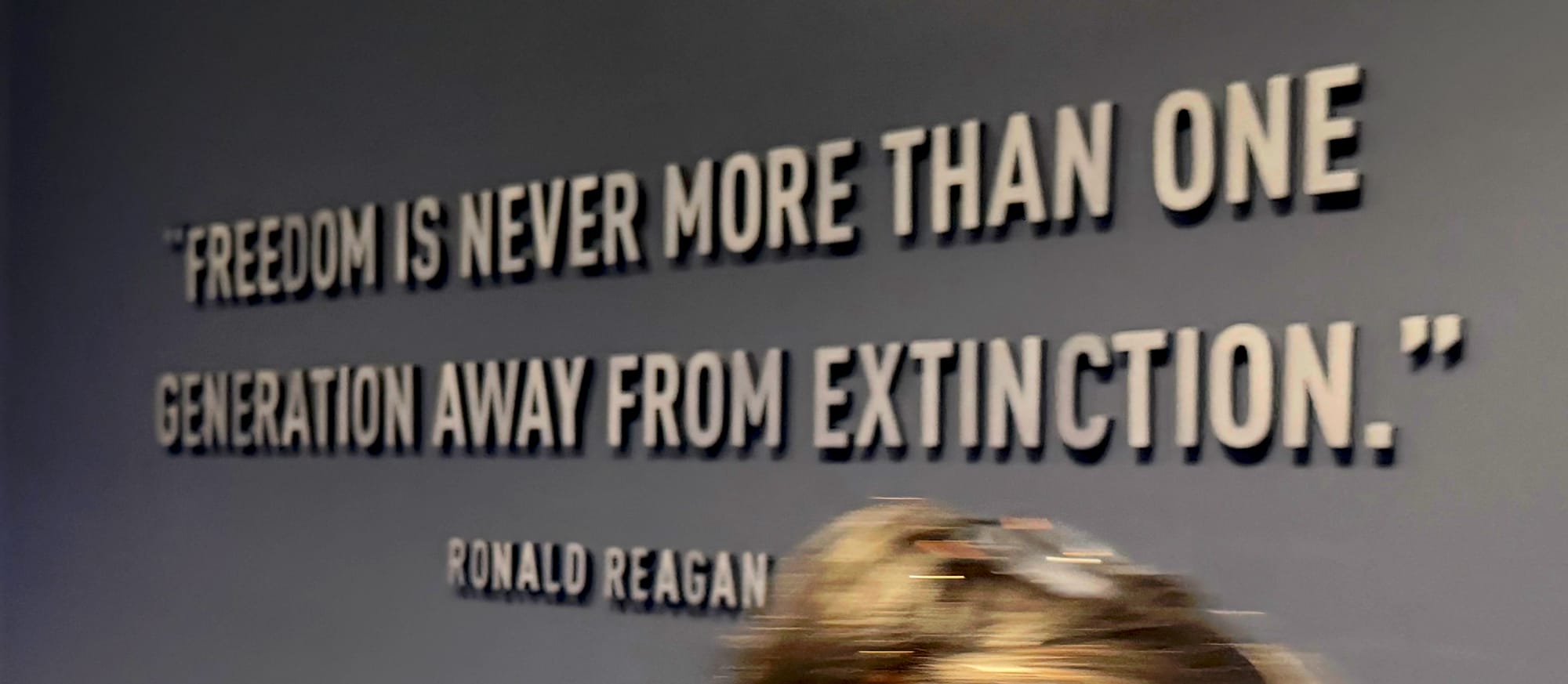
"Freedom is never more than one generation away from extinction."
— Ronald Reagan
It's mounted on a wall when exiting one of the theaters. As you're shuffling toward the exhibits, you walk right past it. I didn't.
Ronald Reagan said that. The man who told us government was the problem, who preached American exceptionalism with evangelical conviction, who dismantled so much of what the New Deal built. He said it, and the museum uses it — not as a comfort, but as a warning. A prophet of democratic fragility, mounted on a wall at the entrance to the exhibits.
I went in carrying that.
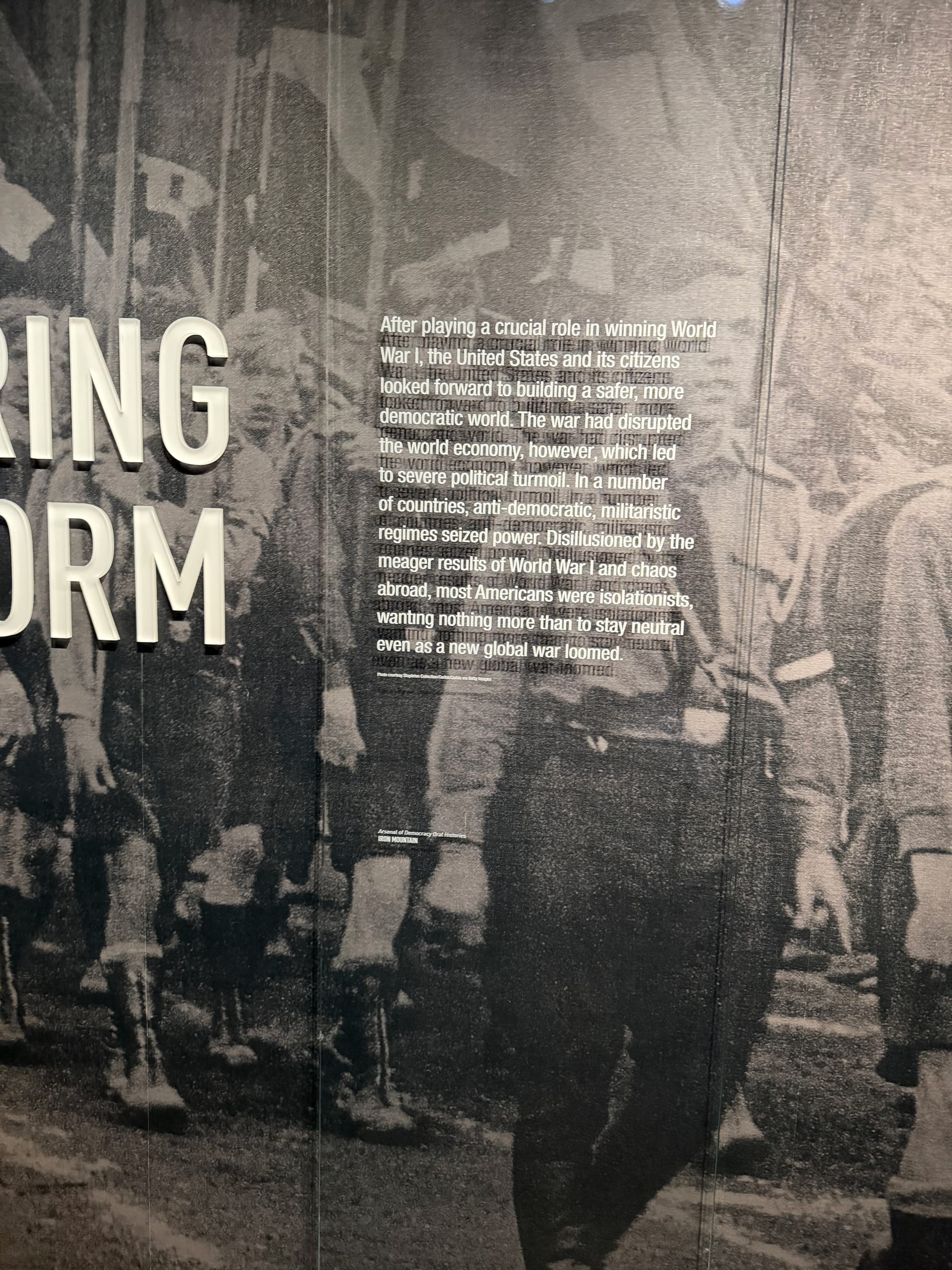
Walking through displays about wealth concentration and democratic backsliding and leaders who preferred force to diplomacy, I kept feeling the floor drop slightly — the way it does when you recognize something you've been living with, and find it confirmed somewhere new.
One of the last things we saw was on the third floor of the Liberation Pavilion, in the Freedom Theater. The platform rotates — the room turns you, physically, to face what's on screen. The film asks you to reckon with what was almost lost, what it cost to save it, and what every generation since has owed to those who paid that cost.
Featured in the presentation are the four freedoms Franklin Roosevelt named before America entered the war. January 1941. The Depression wasn't over. Fascism was winning. He wasn't celebrating. He was making the case that free people had a stake in a free world — and that some things were worth fighting for before you were forced to.
Freedom of Speech. Freedom of Worship. Freedom from Want. Freedom from Fear.
For me, each Freedom landed in the theater like a weight. By the time we got there, we'd already walked through the exhibits. We'd already seen what we'd seen. And as each freedom was named, it pulled everything we'd spent hours walking through behind it — and landed the question I'd been carrying for a year: how many of these are we losing right now?
That's when my grief hit. Not once. Four times.
Freedom of Speech
The Axis understood what free speech was for before most democracies did. It wasn't just nice to have. It was the mechanism by which democracies self-corrected — how bad leaders got replaced, how failed policies got exposed, how citizens maintained enough shared reality to govern themselves together. Destroy that, and the rest follows.
In Germany, it happened quickly. A free press became a state press. Universities fell in line or were emptied of people who wouldn't. The word for what came next was Gleichschaltung — coordination, synchronization, bringing every institution to heel. It didn't require violence at every step. Mostly it required people deciding that speaking up wasn't worth the cost.
When the film named it — Freedom of Speech — all of that came back at once. Watching it happen today — institution by institution, person by person — the same calculation playing out: speaking up simply isn't worth the cost. I'd spent an hour walking through the evidence. Sitting in that theater, I felt the weight of it land.
And underneath all of it, an information environment deliberately poisoned — algorithms and disinformation flooding the zone until people can't agree on what's true, can't organize around shared facts, can't even trust what they're reading right now. The goal isn't silence. It's confusion.
The museum is just telling you about the 1930s. The grief hits me in the recognition.
Freedom of Worship
Roosevelt's second freedom is the one that sounds the most settled. America has always had religious liberty. The First Amendment is unambiguous. This isn't really under threat — or so the comfortable version of the story goes.
What the 1930s showed is that the threat rarely comes from the outside in. It comes from the inside out. The Nazi regime didn't eliminate the German church. It captured it — pressuring clergy into loyalty, rewarding those who wrapped the swastika in scripture, punishing those who refused. State religion isn't the absence of faith. It's faith conscripted into the service of power.
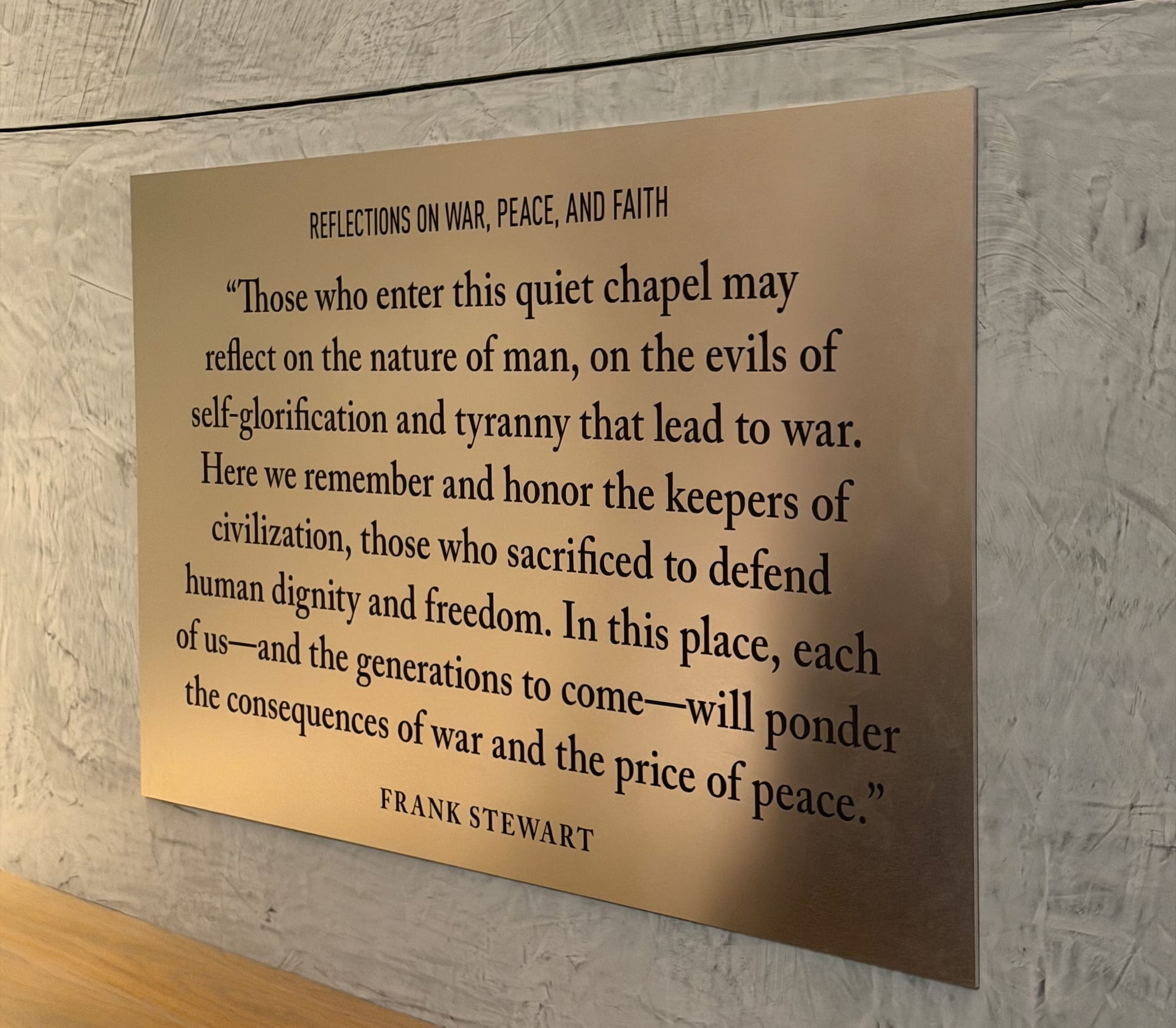
Just outside the museum's chapel, a plaque reads:
"Those who enter this quiet chapel may reflect on the nature of man, on the evils of self-glorification and tyranny that lead to war. Here we remember and honor the keepers of civilization, those who sacrificed to defend human dignity and freedom." — Frank Stewart
It names, plainly, what faith is supposed to be against. The artifacts nearby — chaplains' field kits, soldiers' worn Bibles, a Star of David alongside a crucifix — were things people carried into combat not as symbols of a cause, but as private anchors. Faith in service of human dignity, not power.
When the film named it — Freedom of Worship — what came back was that chapel. And then something closer.
I'm a person of faith. Early on, I tried to say something about what I was seeing. I've mostly stopped, in certain circles. What I kept watching was people I care about quietly setting aside the parts of their faith that got in the way of what they wanted politically. That's not a door closing. It's something quieter and harder to name.
That's not the German church. It's not even close. But the mechanism — a faith community where political loyalty and religious identity have fused, where dissent becomes unwelcome — I didn't need the museum to explain it to me. I came in already knowing what it felt like from the inside.
A month later, I read about what happened at the Pentagon. The grief hits me in the recognition.
Freedom from Want
This is the freedom that made the others possible to lose. The museum's pre-war timeline doesn't begin with Hitler. It begins with Versailles, then hyperinflation, then the German economy collapsing, then mass unemployment — a population ground down by a decade of deprivation before a single demagogue asked them who was to blame. Fascism didn't seduce a prosperous people. It recruited a desperate one.
Roosevelt understood this in his bones. He'd spent eight years fighting the Depression before he gave the Four Freedoms speech. Freedom from Want wasn't an abstraction to him — it was the precondition for everything else. People who are afraid of losing everything are not free, even if no one is threatening their speech or their church. Fear of want is its own kind of captivity.
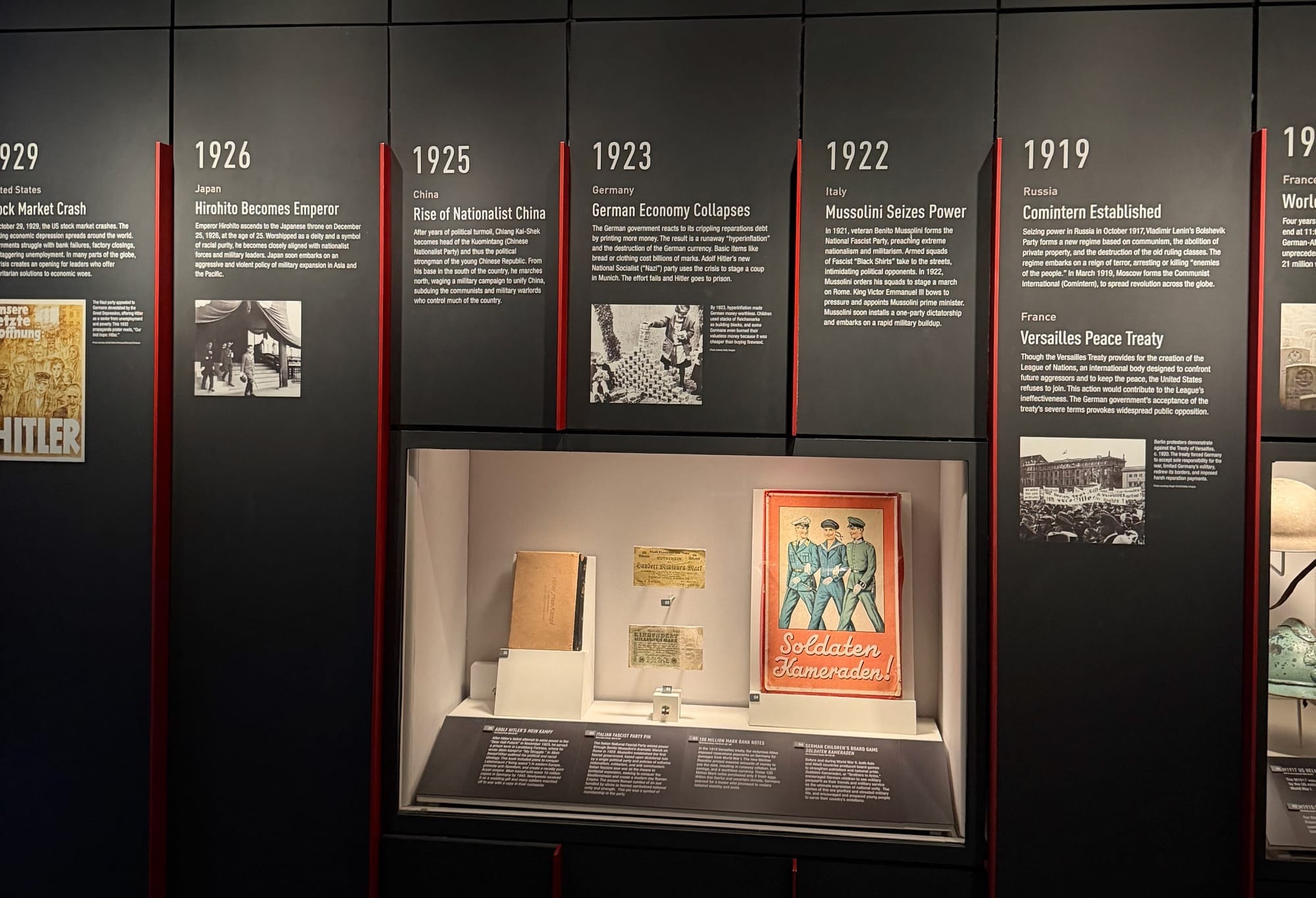
When the film named it — Freedom from Want — this one hit hardest. The pre-war timeline was still fresh. I'd been staring at that wall an hour earlier. Sitting in the theater, I felt the full weight of it land.
The conditions aren't identical — they never are. But forty years of wage stagnation while wealth concentrated at the top — and that concentrated wealth has spent that time buying the political system designed to check it. The systematic dismantling of the protections built to keep working people from freefall. The campaign finance rules that once limited that influence are gone, one Supreme Court decision at a time.
The museum didn't make that connection. I couldn't stop making it. The grief hits me in the recognition.
Freedom from Fear
Roosevelt defined this one carefully. He didn't mean the absence of all fear — he meant freedom from the fear of physical violence at the hands of your own government, or a government that might invade yours. The freedom to go about your life without wondering if the knock on the door was coming for you.
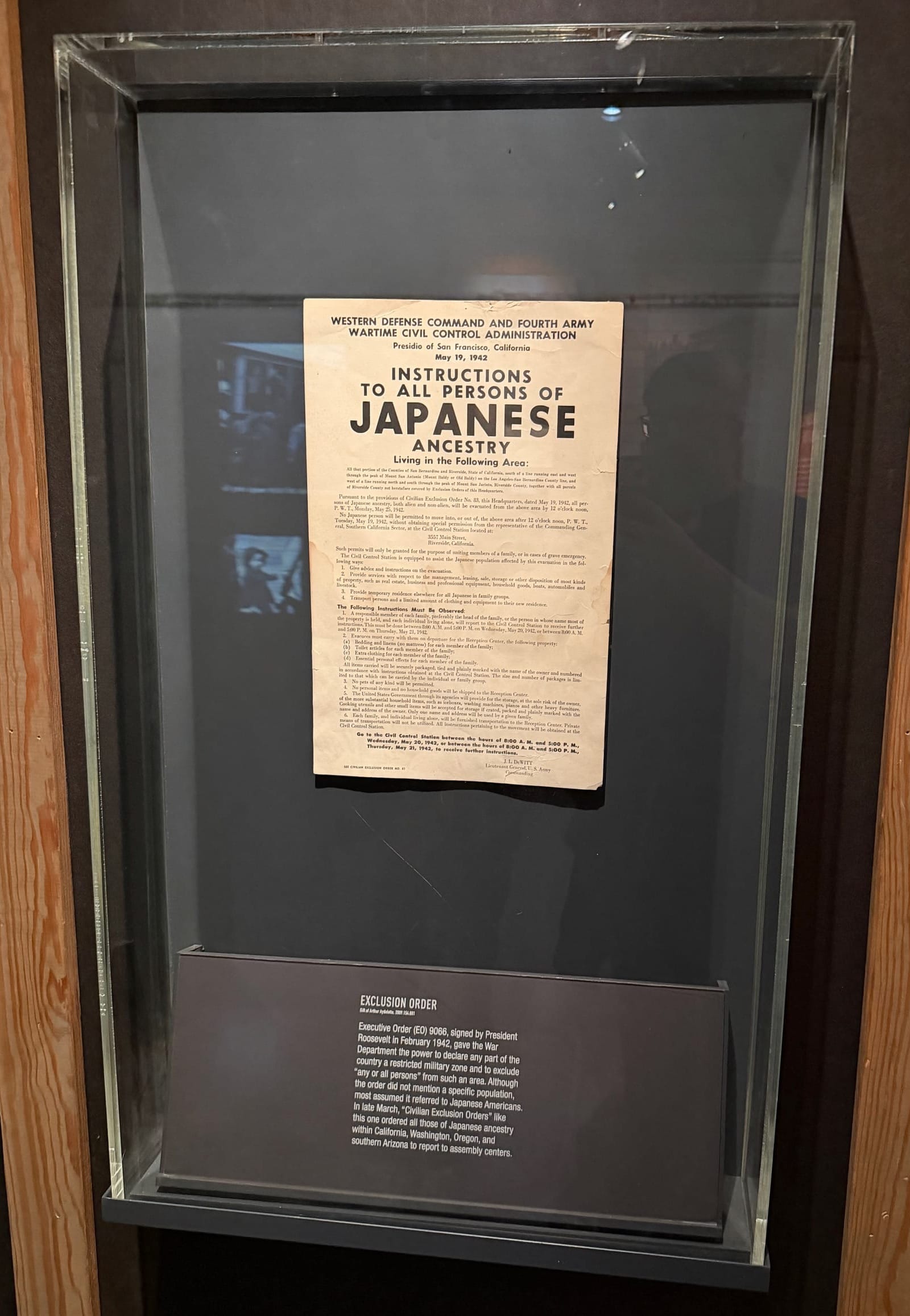
The museum doesn't let you hold that aspiration without complicating it. Under glass in one of the home front exhibits sits an official order — Instructions to All Persons of Japanese Ancestry — that forced 120,000 American citizens from their homes and into camps, on the authority of the same government that was fighting fascism abroad in the name of human dignity. The exhibit's framing asks the question plainly: why did the country deny so many citizens the same rights for which its soldiers were giving their lives?
There's no clean answer. There never was. But what struck me standing there is that the fear was manufactured. It was stoked, directed, given a face. Japanese Americans were not a threat. They were a target — convenient, visible, and stripped of the political power to fight back.
When the film named it — Freedom from Fear — by the fourth, the grief wasn't arriving in waves anymore. It was just there. And what came back was that document under glass — the internment order. The same government fighting fascism abroad, signing the papers that sent its own citizens to camps.
What I couldn't put down: families who have lived here for decades, afraid to answer the door. Federal workers who self-censor because they don't know which programs will survive the week. Scientists who have stopped publishing findings that contradict the preferred narrative.
The current administration didn't invent this. The grief hits me in the recognition.
A Better World
The museum ends where the war did — Tokyo Bay, September 2, 1945. General Douglas MacArthur stood on the deck of the USS Missouri and spoke.
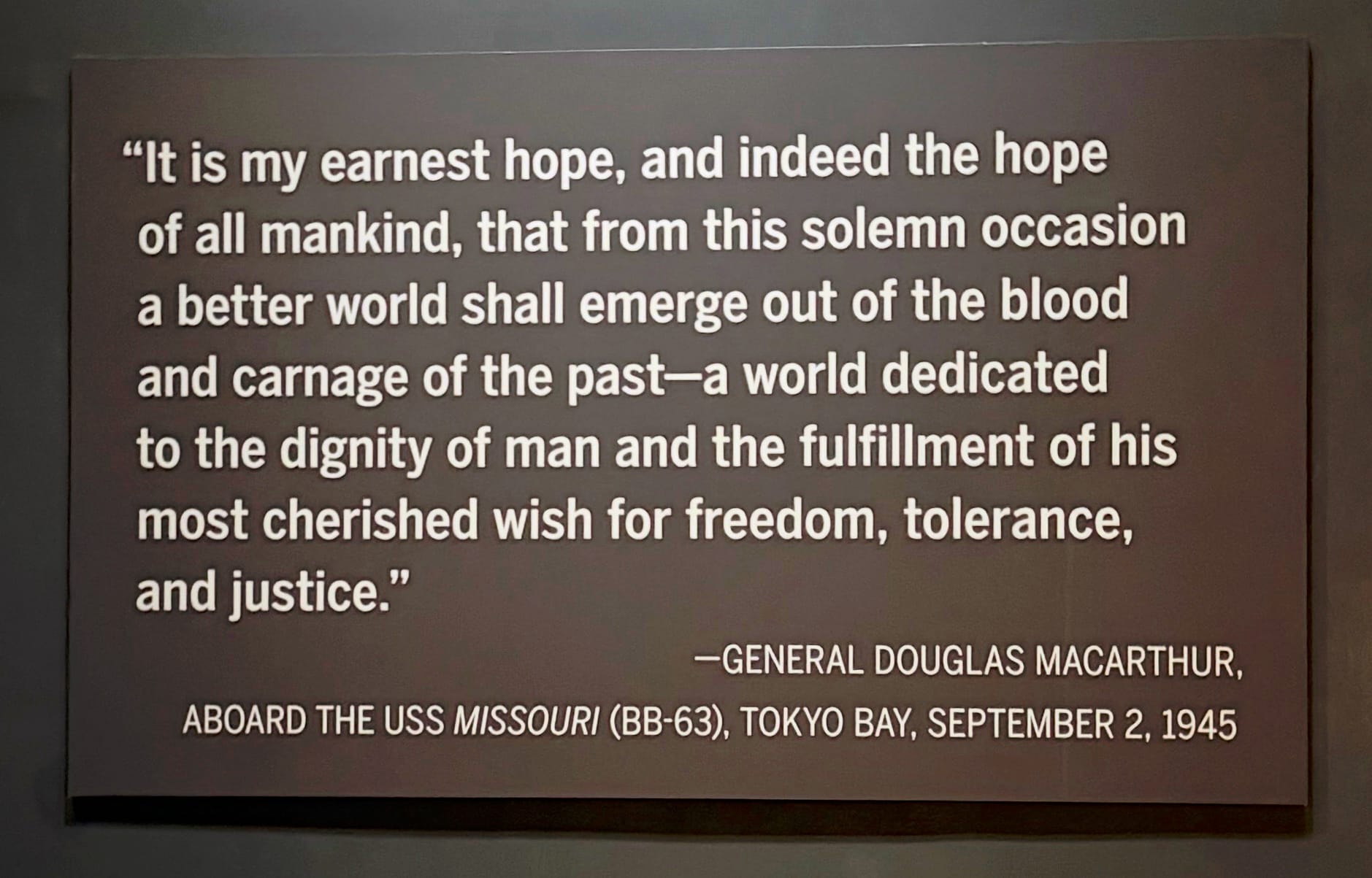
"It is my earnest hope, and indeed the hope of all mankind, that from this solemn occasion a better world shall emerge out of the blood and carnage of the past — a world dedicated to the dignity of man and the fulfillment of his most cherished wish for freedom, tolerance, and justice." — General Douglas MacArthur
That world was actually built. The Marshall Plan rebuilt Europe. The United Nations created the first framework for collective human rights. NATO held the line against Soviet expansion. For all its failures, the post-war liberal order represented something unprecedented: a serious attempt by nations, together, to replace force with law.
It was incomplete at birth. The country that fought to defeat racial superiority abroad enforced racial hierarchy at home. Black Americans served in a segregated military and returned to a segregated country. Japanese Americans were imprisoned by executive order — by the same government whose soldiers were dying in the name of human dignity. The Four Freedoms were the aspiration. The reality was something more complicated and more cruel.
But in the decades that followed — imperfectly, haltingly, sometimes only under enormous pressure — the country kept getting better. Civil rights. Voting rights. The slow, contested expansion of who the freedoms actually covered. That arc is part of what's being broken now. Not just the institutions themselves, but the idea that a democracy can reckon with its failures and correct them. That better is possible.
What I felt walking out of that museum — past MacArthur's words on the wall — was grief for something in the process of being dismantled. Not a golden age that never existed. The actual, specific, imperfect world that MacArthur hoped for. The one that cost so much to build.
He called it his earnest hope. It is also mine.